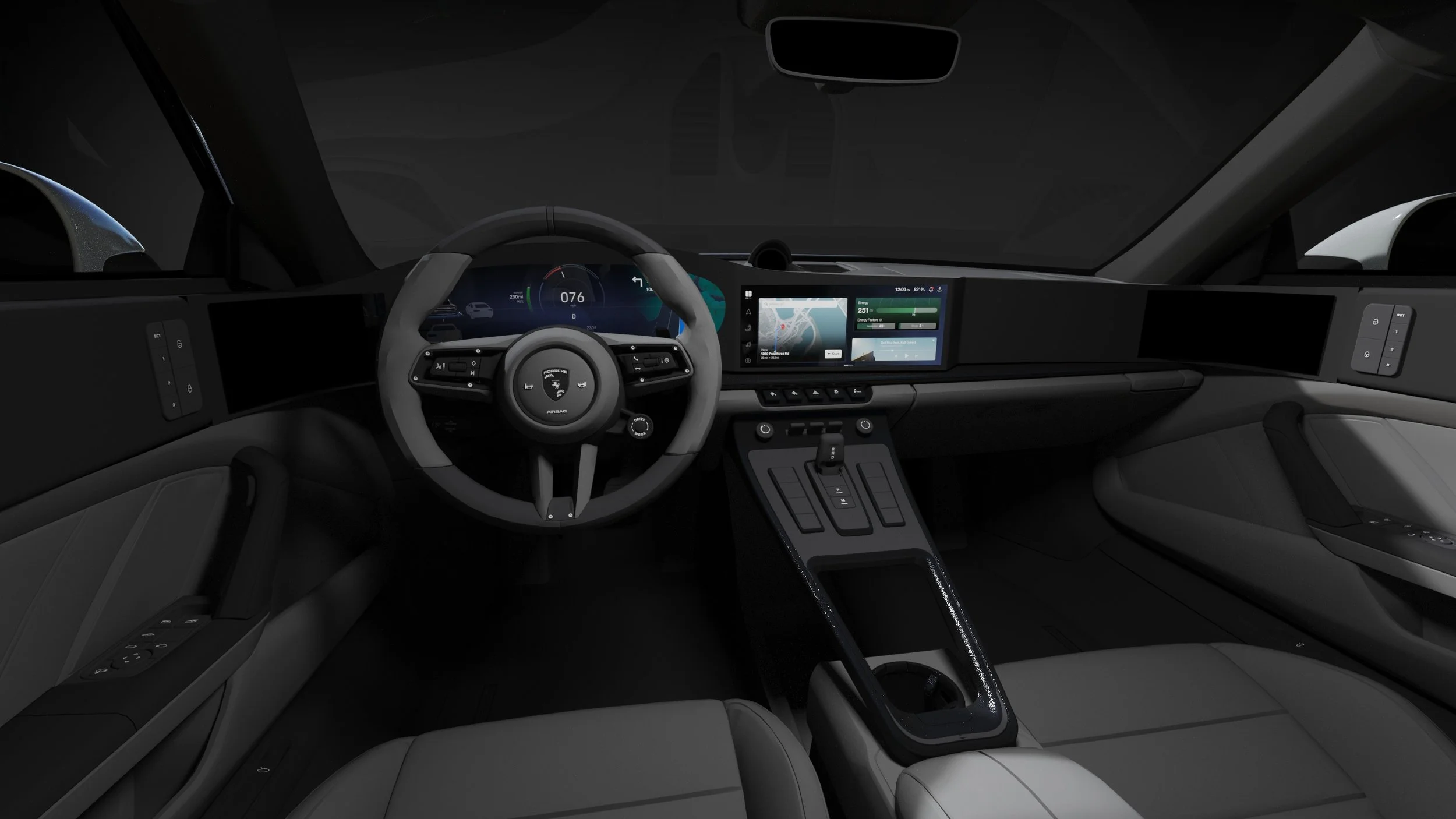
Analog spirit. Digital exactness.
A Porsche EV cockpit UI, redesigned and proven in user testing.
How to design effectively for an EV future that's still taking shape?
What will matter most to the drivers joining the electric transition over the next 5 years?
In numbers
160+
survey responses
62%
want “smart & connected”
30+
interviews
71%
fear that tech will interfere with the purity of driving
User Experience
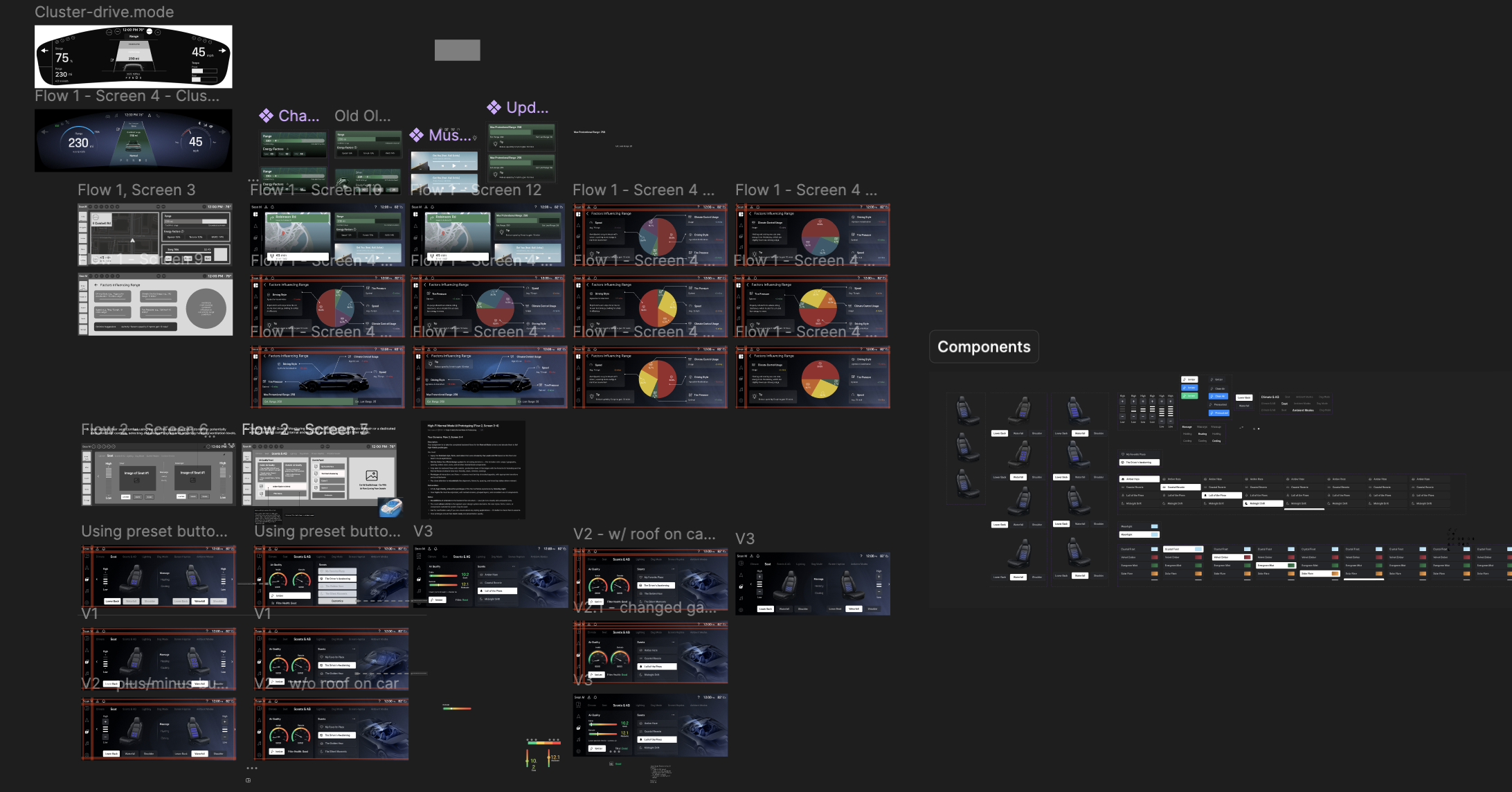
Wireframes & IA
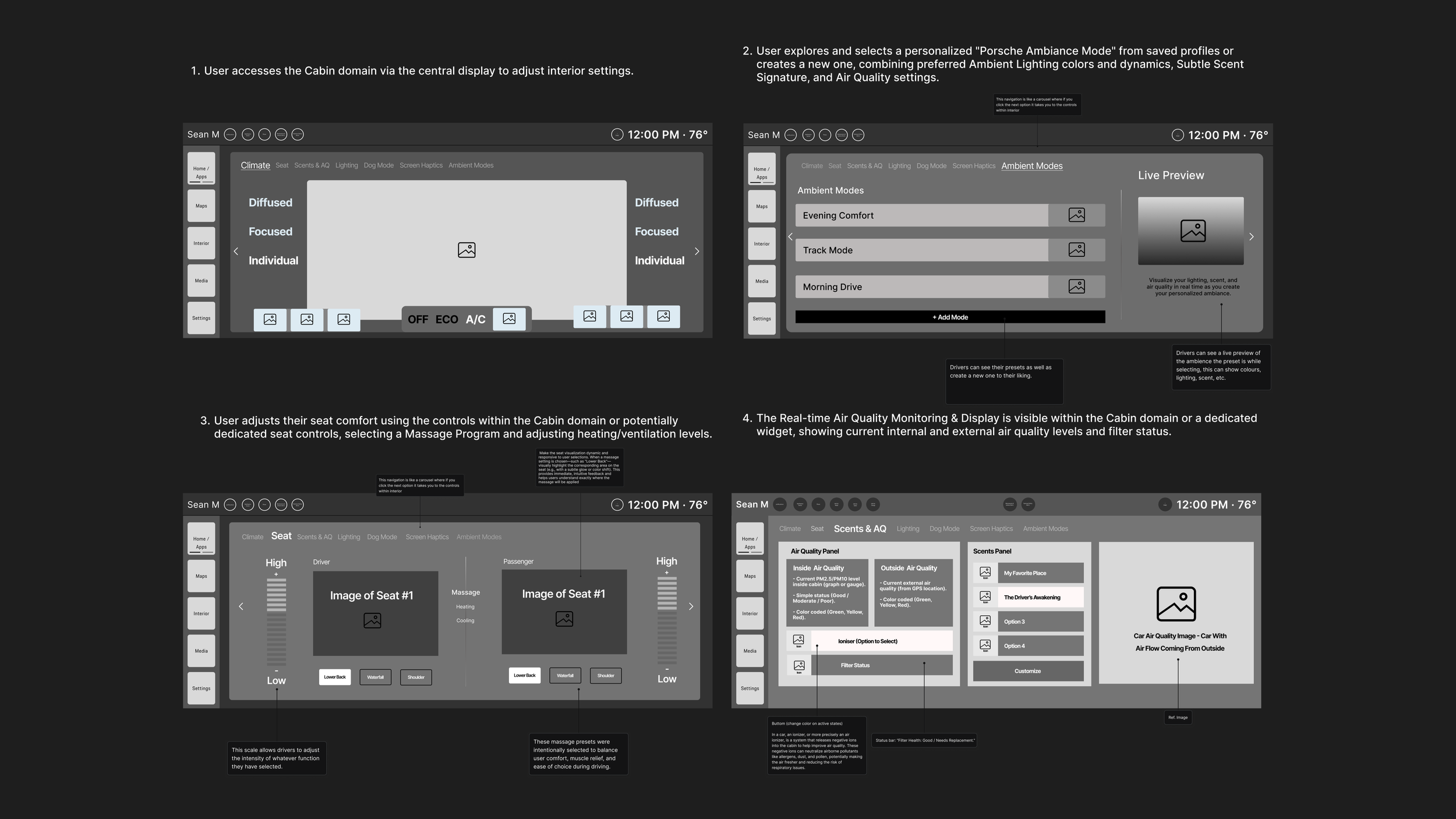
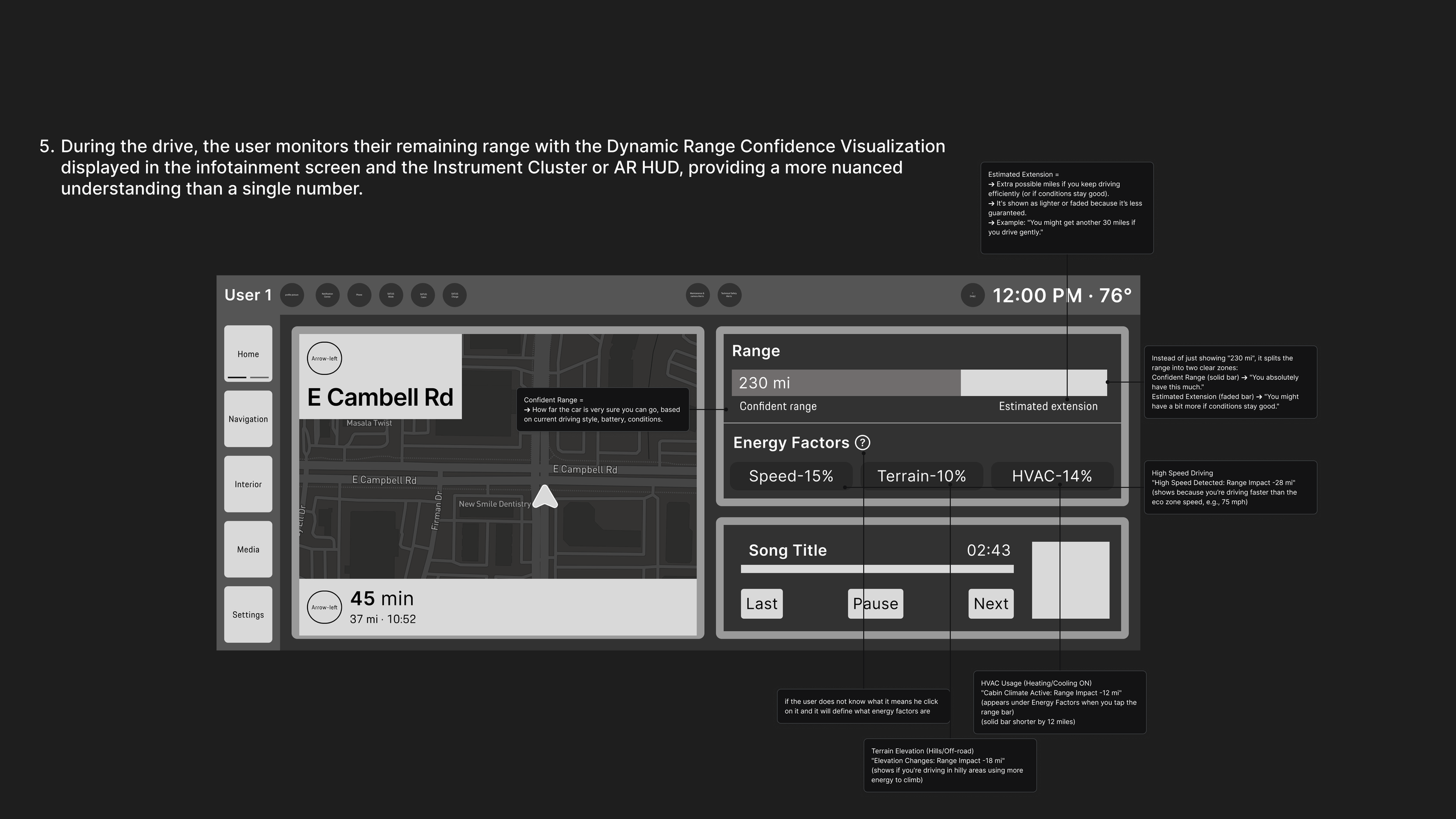
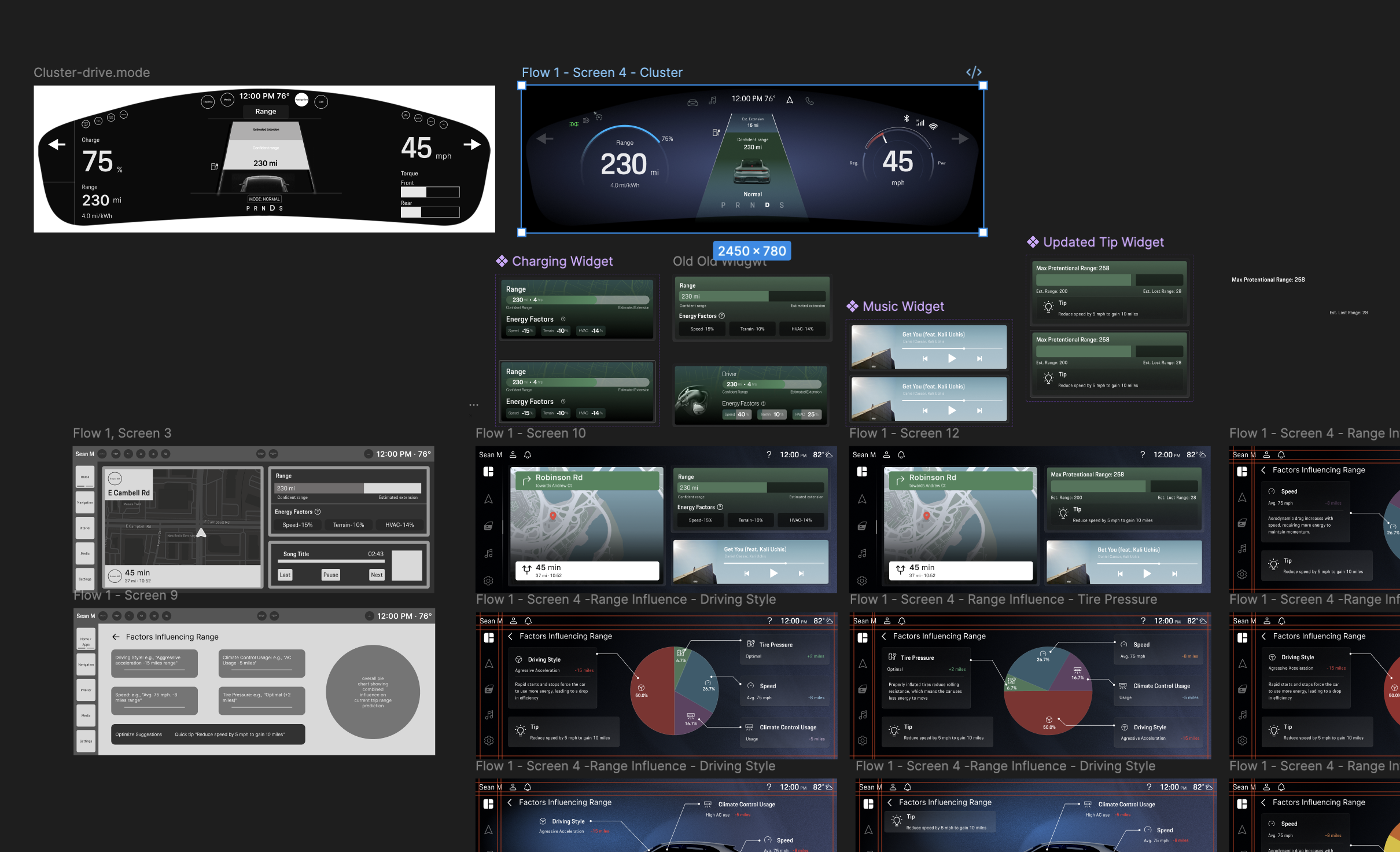
The wireframes began with research. Tasks were audited, risks mapped, and a new information architecture set the rules. Safety and accessibility led the choices. Priority, depth, and focus order were defined for glance time, thumb reach, clear labels, and readable contrast.
Each frame became a clickable path. Maze studies read success, drop offs, misclicks, and heatmaps, then the IA was tuned until actions stayed a click away and menus stayed shallow. Drive modes shared one mental model so context could shift without confusion. The blueprint stayed light. The logic stayed Porsche.

Usability Testing
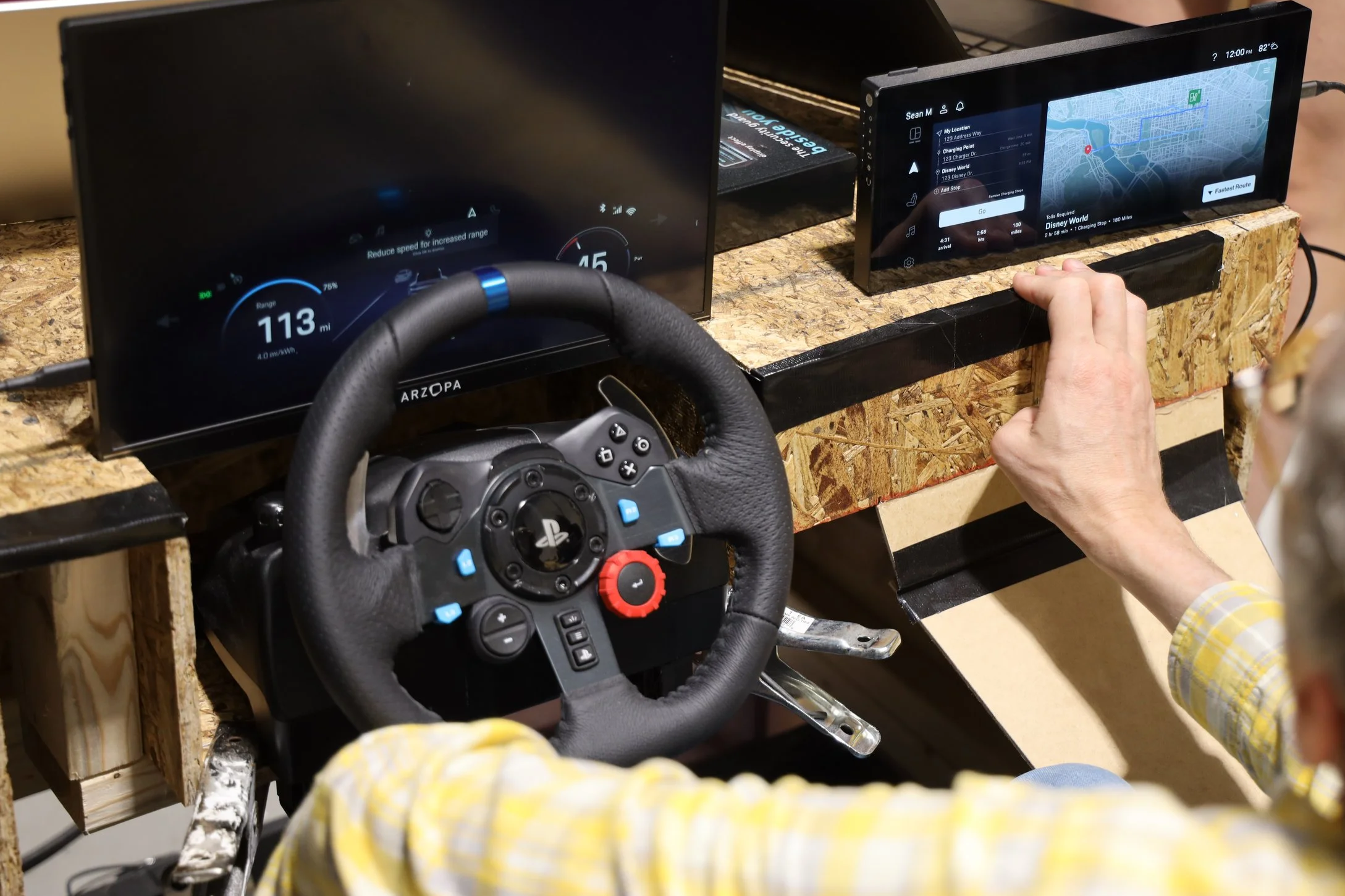
Each cycle ran in Maze with participants completing core tasks end to end. Missions tracked success, drop offs, misclicks, heatmaps, and mission paths. Screen recordings and notes paired with quick A/B prototypes. Edits to labels, hierarchy, and tap targets went back into fresh Maze runs. The loop repeated until flows read clean and results held steady.
-
we use success rate, drop-offs, misclicks, time on task, heatmaps, and click traces to spot friction and confirm gains.
-
clickable prototypes, pilot them, and launch missions in Maze
-
refine labels, steps, and targets, then rerun in Maze and UT lab until results are stable.
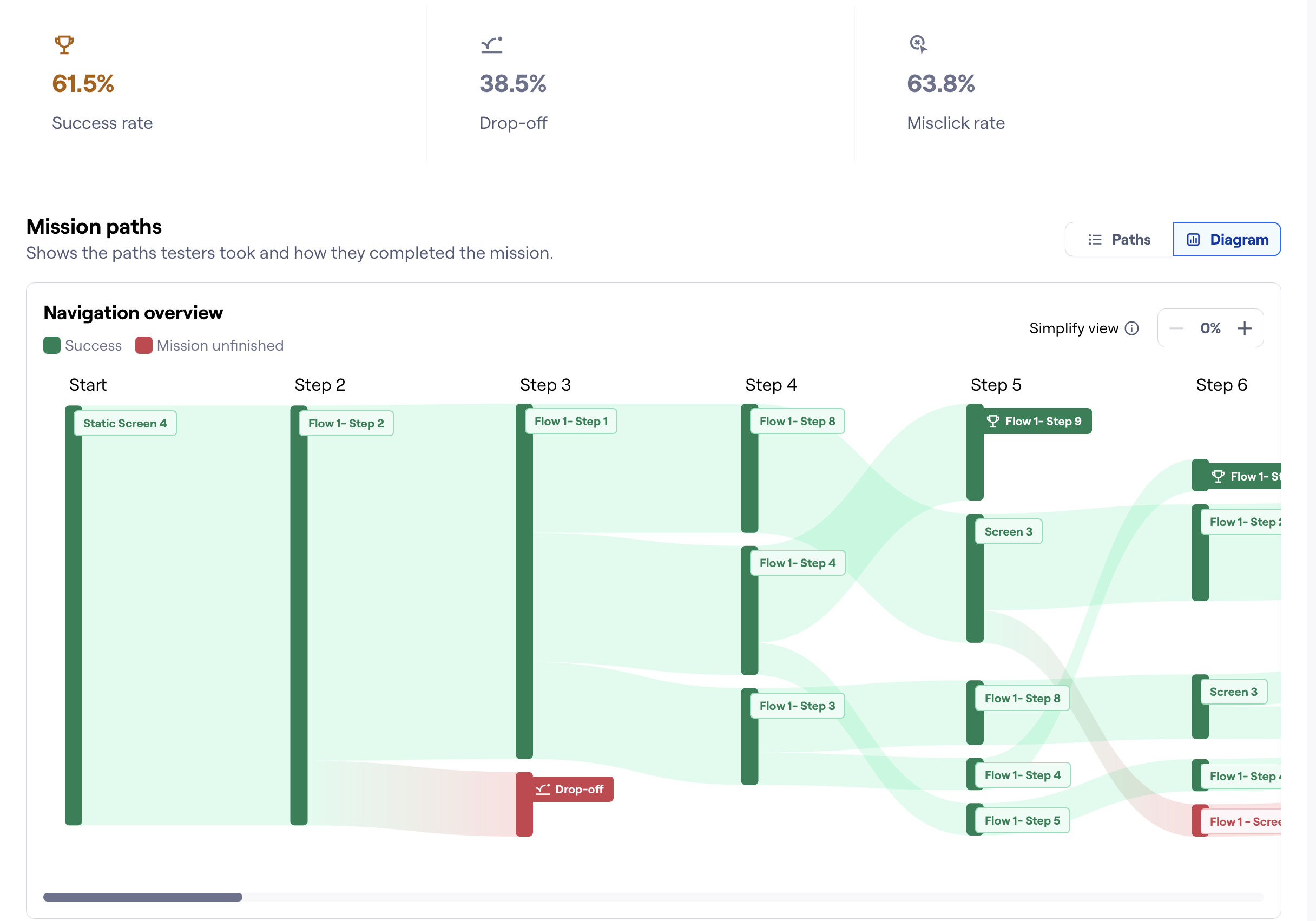
61.5% - not good enough
The first build went into Maze. Everything was tested, even the bad ideas. Success, drop offs, misclicks, time on task, heatmaps, mission paths, and session recordings mapped the friction. Too many taps. Too much search. Not good enough. The data set the cuts and the next iteration.
First iteration
The first pass set goals and constraints. Core tasks were mapped and success criteria defined before a single pixel. Low fidelity flows became clickable prototypes. Moderated sessions captured heatmaps, click traces, mission paths, and time on task. Each cycle removed friction and clarified labels

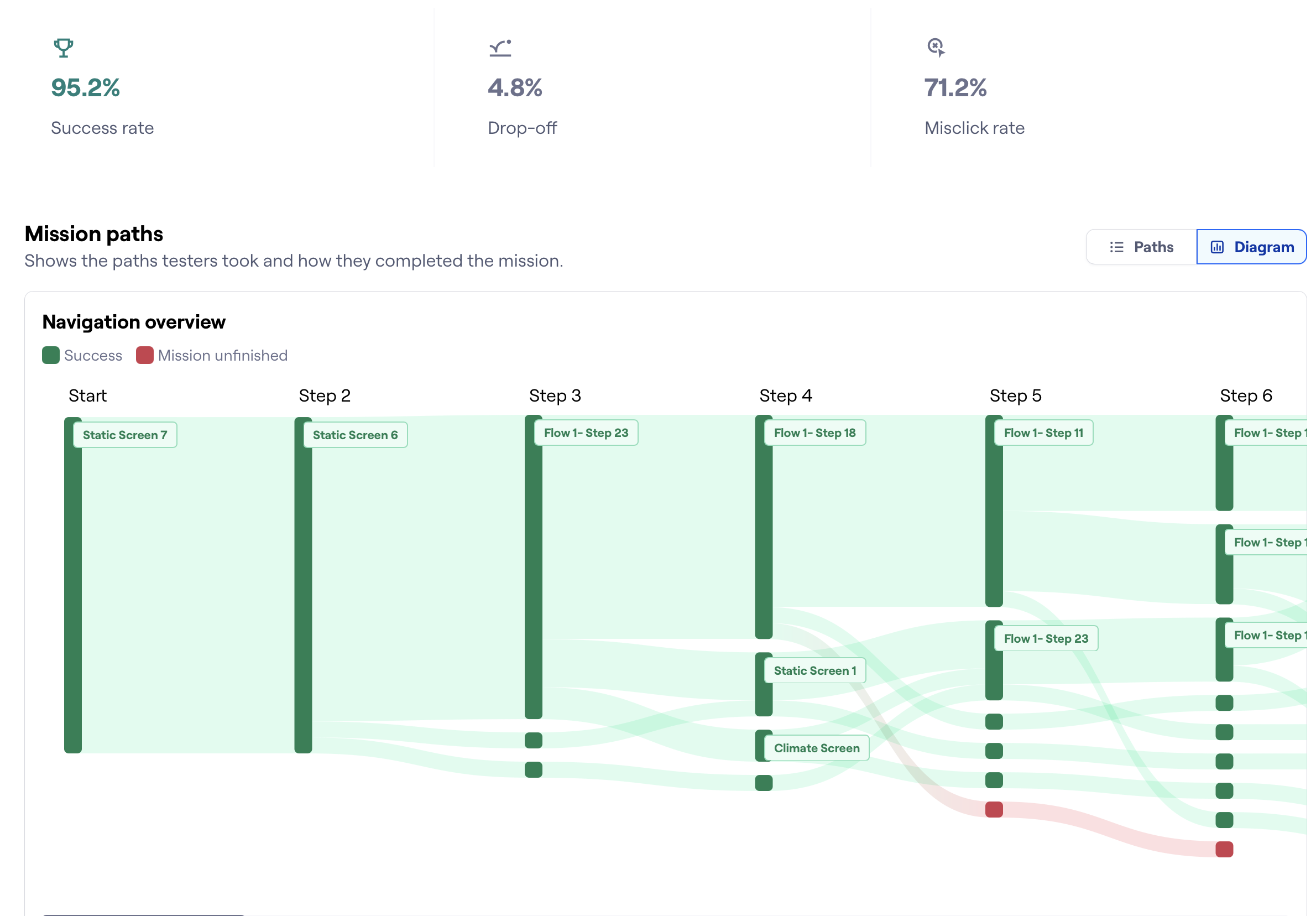
95%
Success rate
Achieved through cycles of user testing and iteration. Heatmaps, click traces, and mission path maps exposed friction. Labels were clarified, steps removed, and targets tuned until misclicks dropped and paths converged. The result is a shallow, predictable flow that stays a click away.
Analog spirit. Digital exactness.
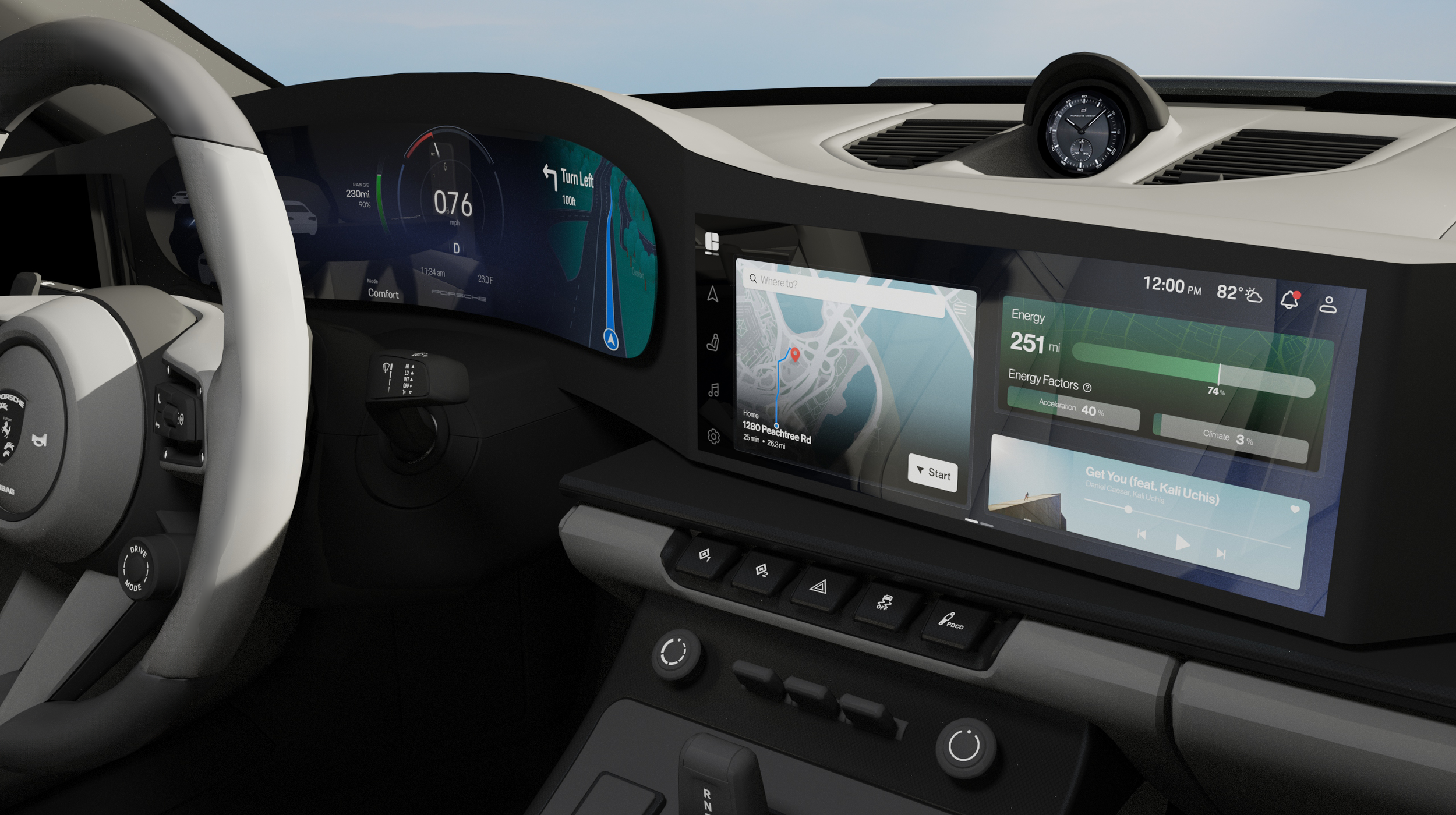
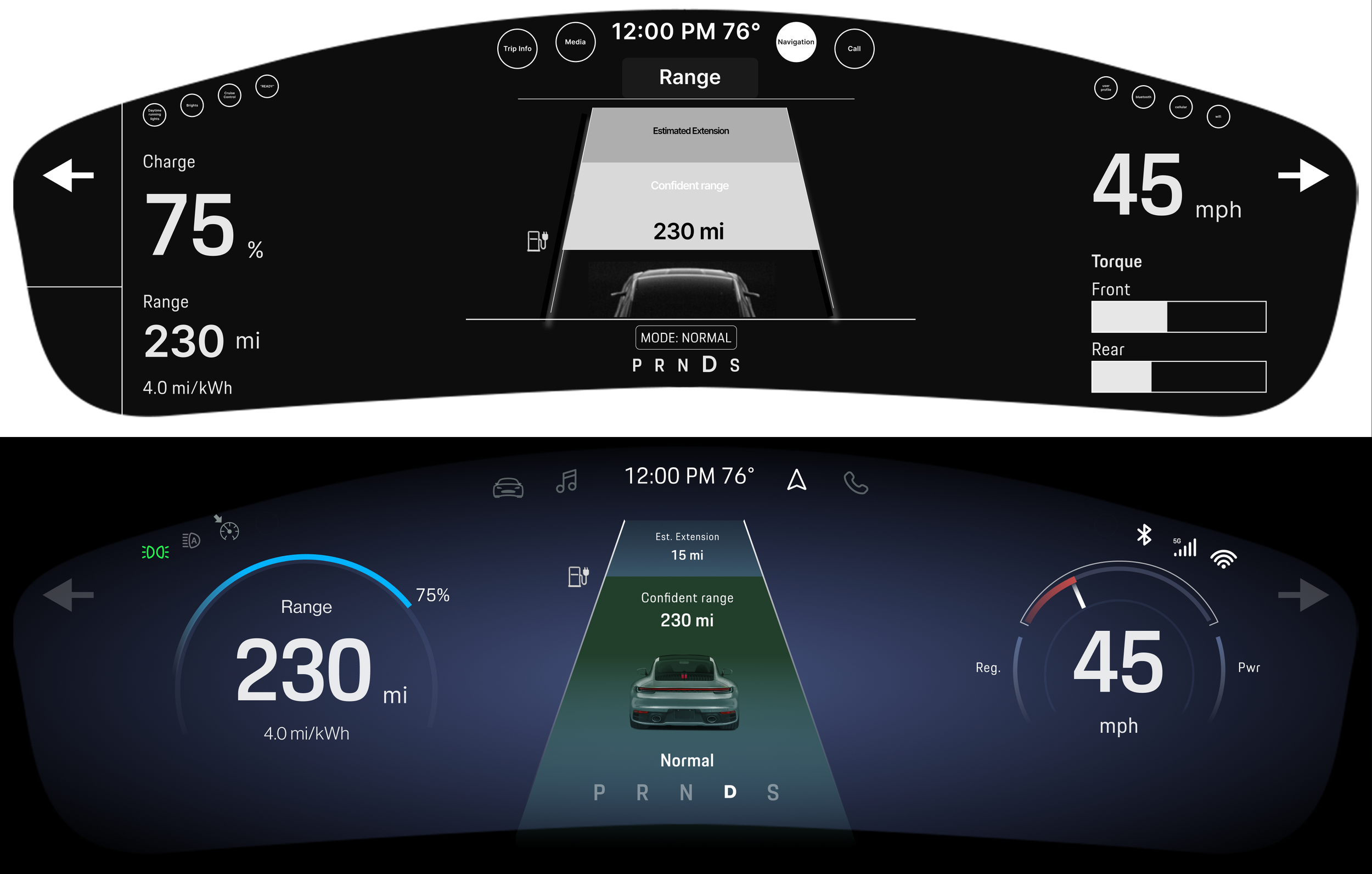
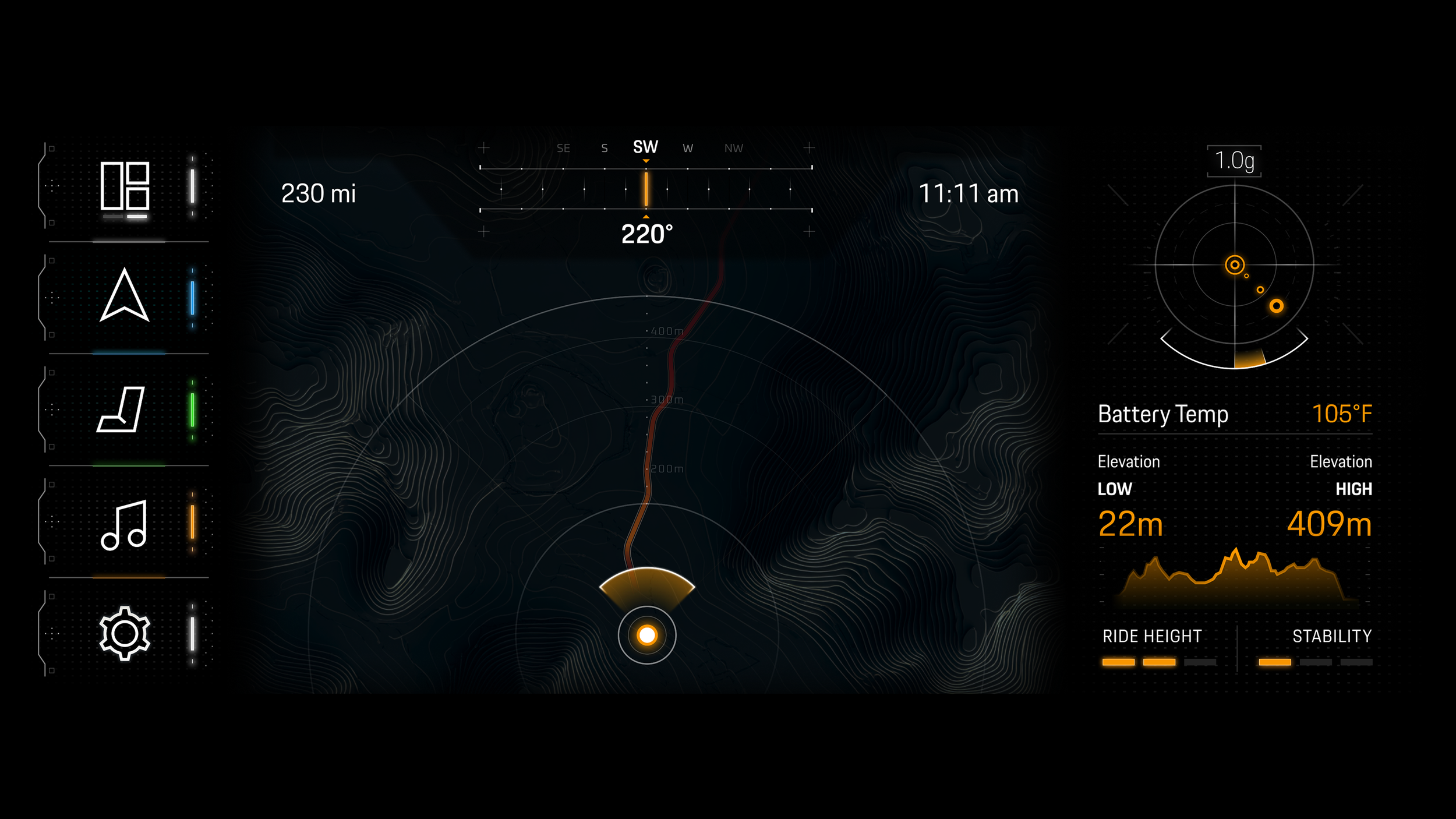
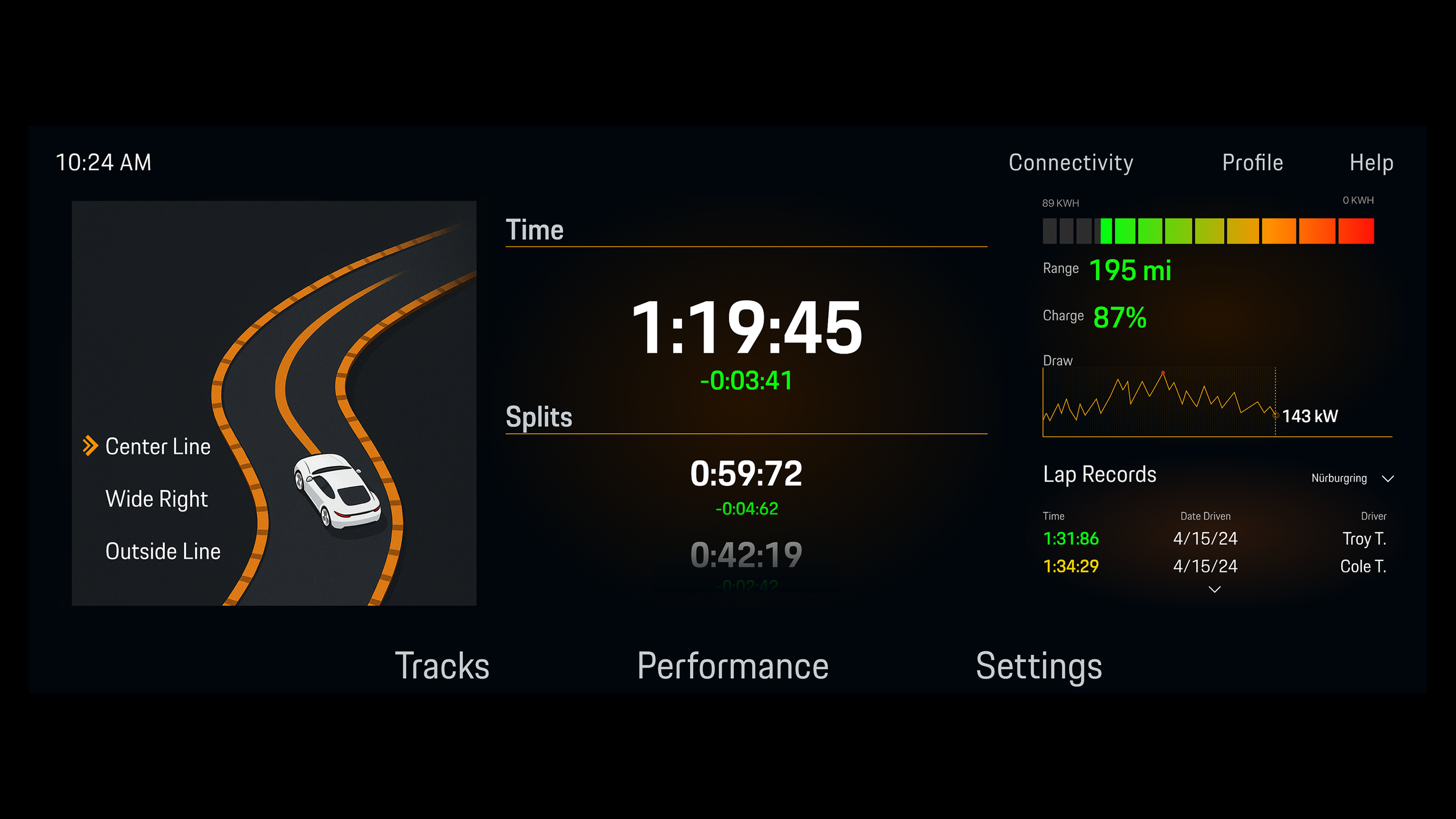
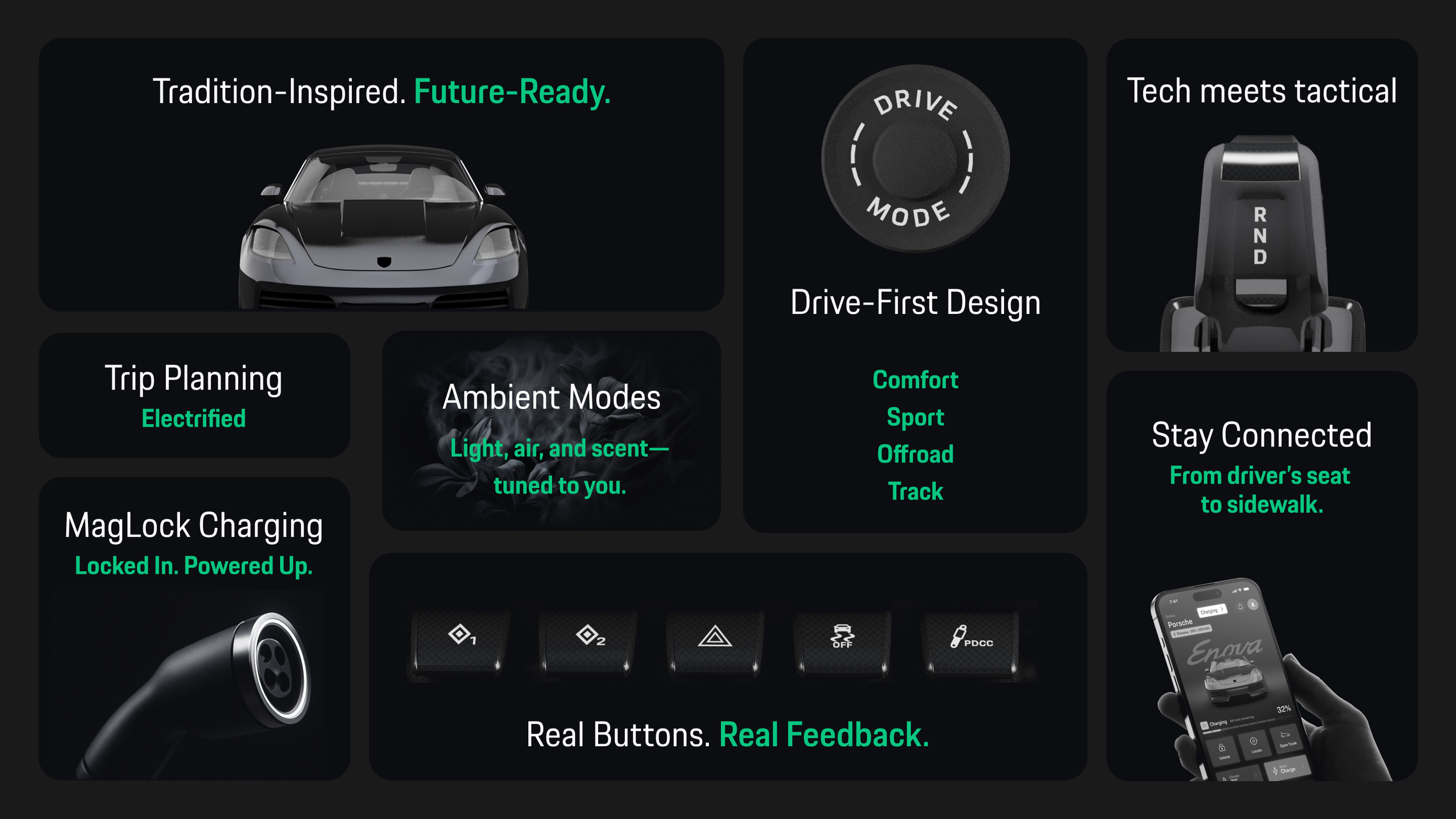
Layouts shift with the drive. Comfort surfaces range, assistance, and smooth speed. Track centers revs, temps, and lap timing in high contrast. Off-road brings pitch, roll, and traction split to the front. Information moves, forms stay. The cluster adapts yet stays unmistakably Porsche.
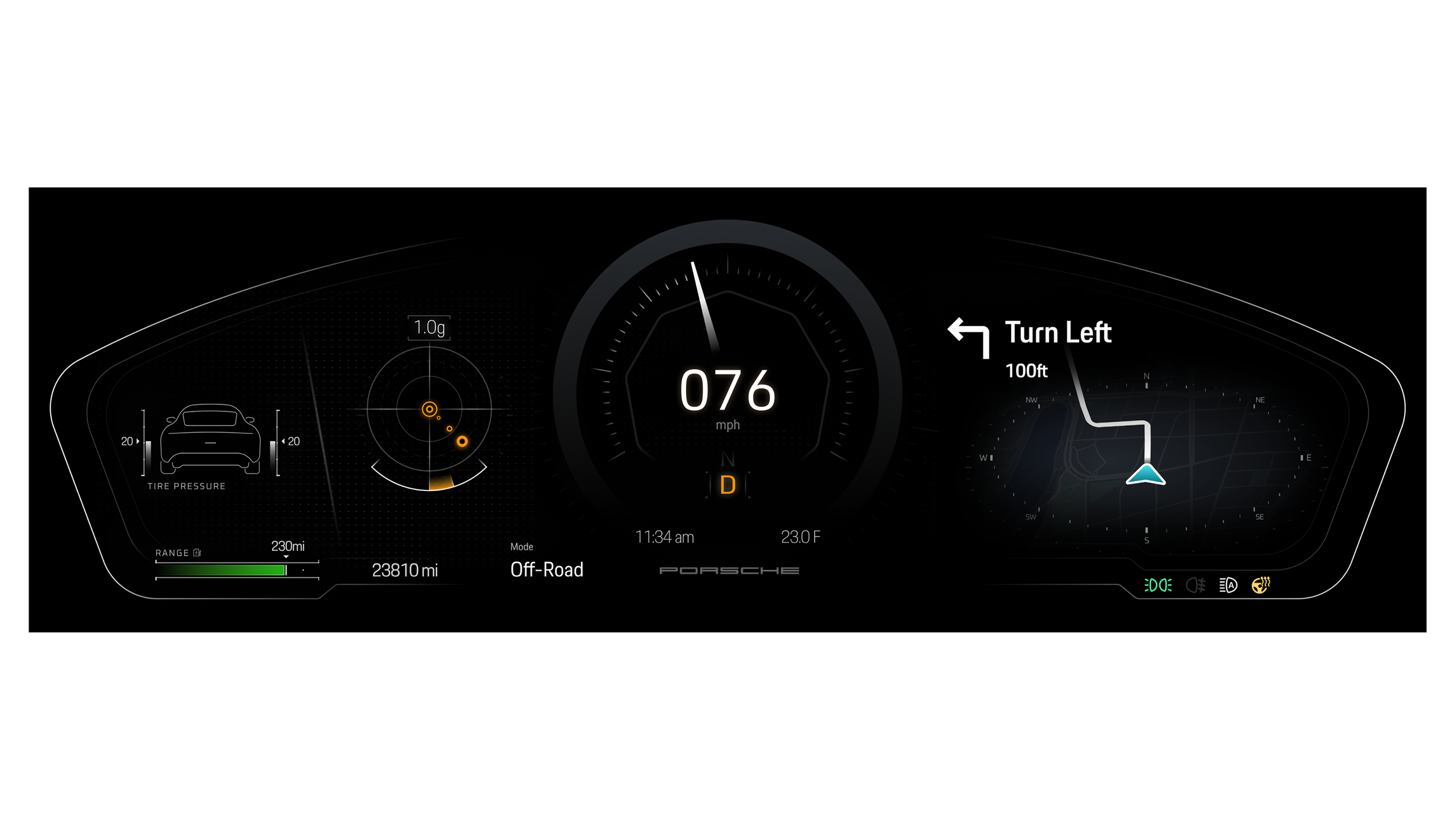
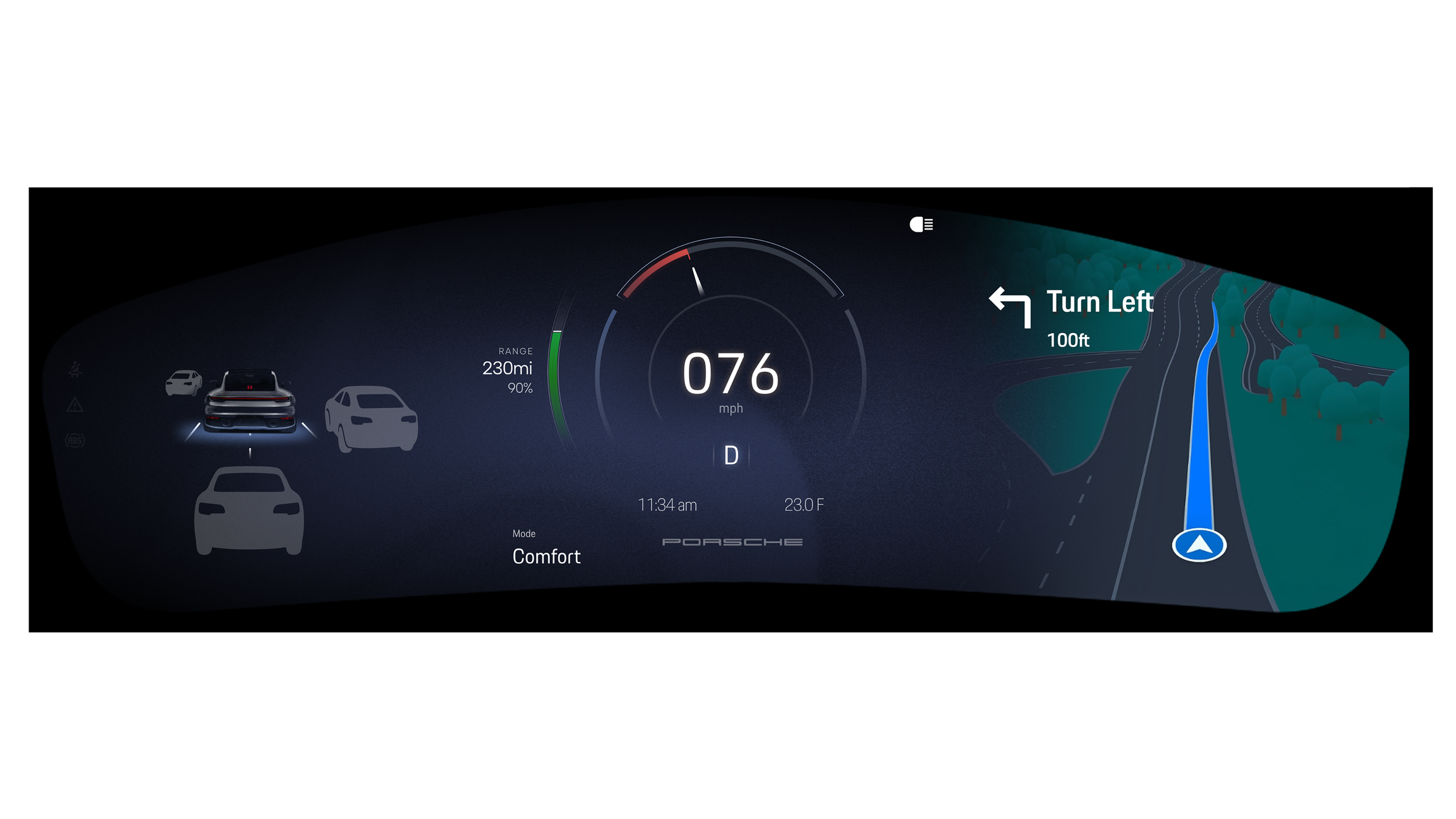
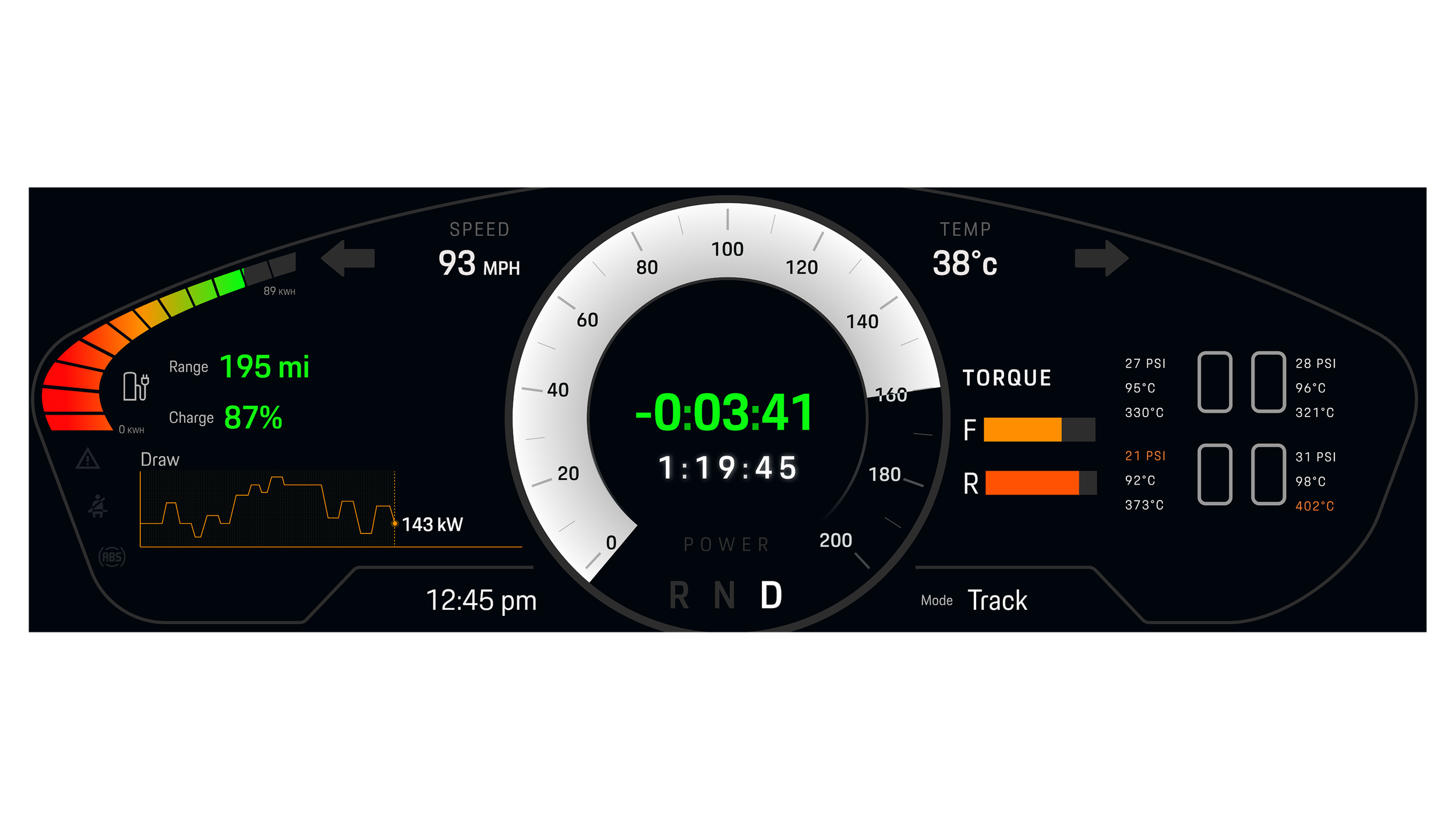
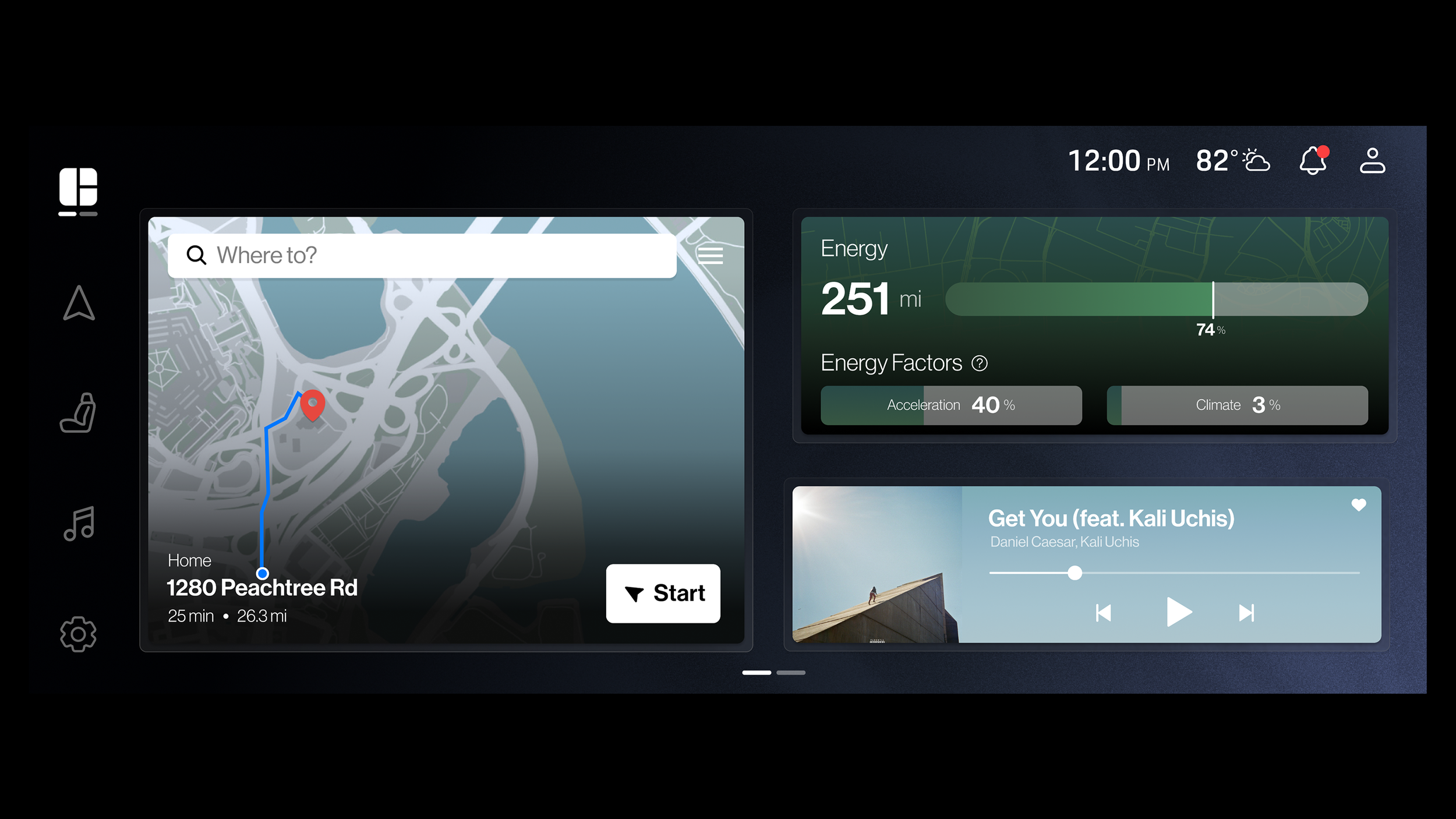
Center display. Calm control.
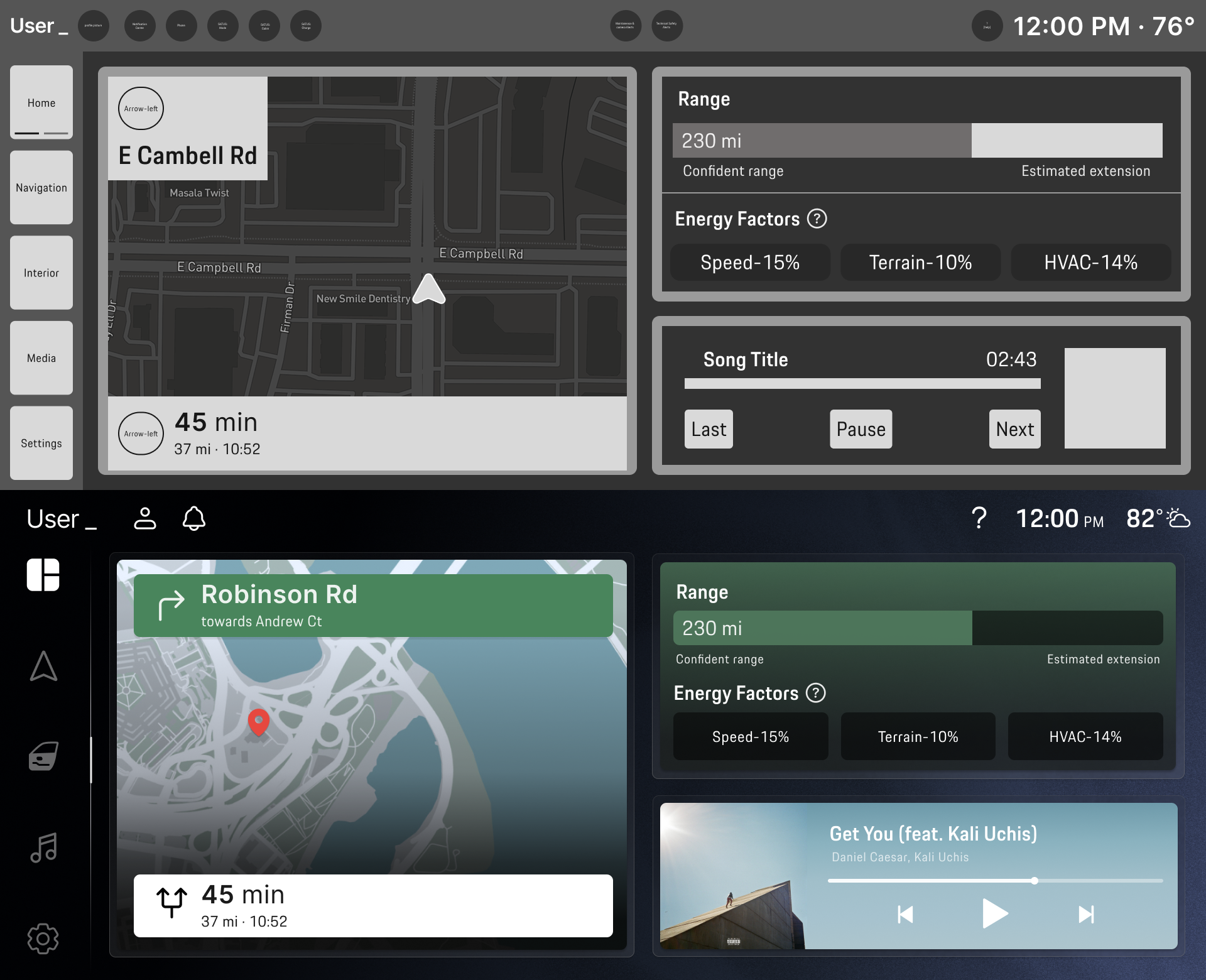
Interactions stay a click away, not buried in menus. Primary actions sit within easy reach. Navigation, media, climate, and charging remain present. Panels open shallow and close fast. The layout adapts to context without losing its place. You stay in flow.
Heads up
Eyes on the horizon
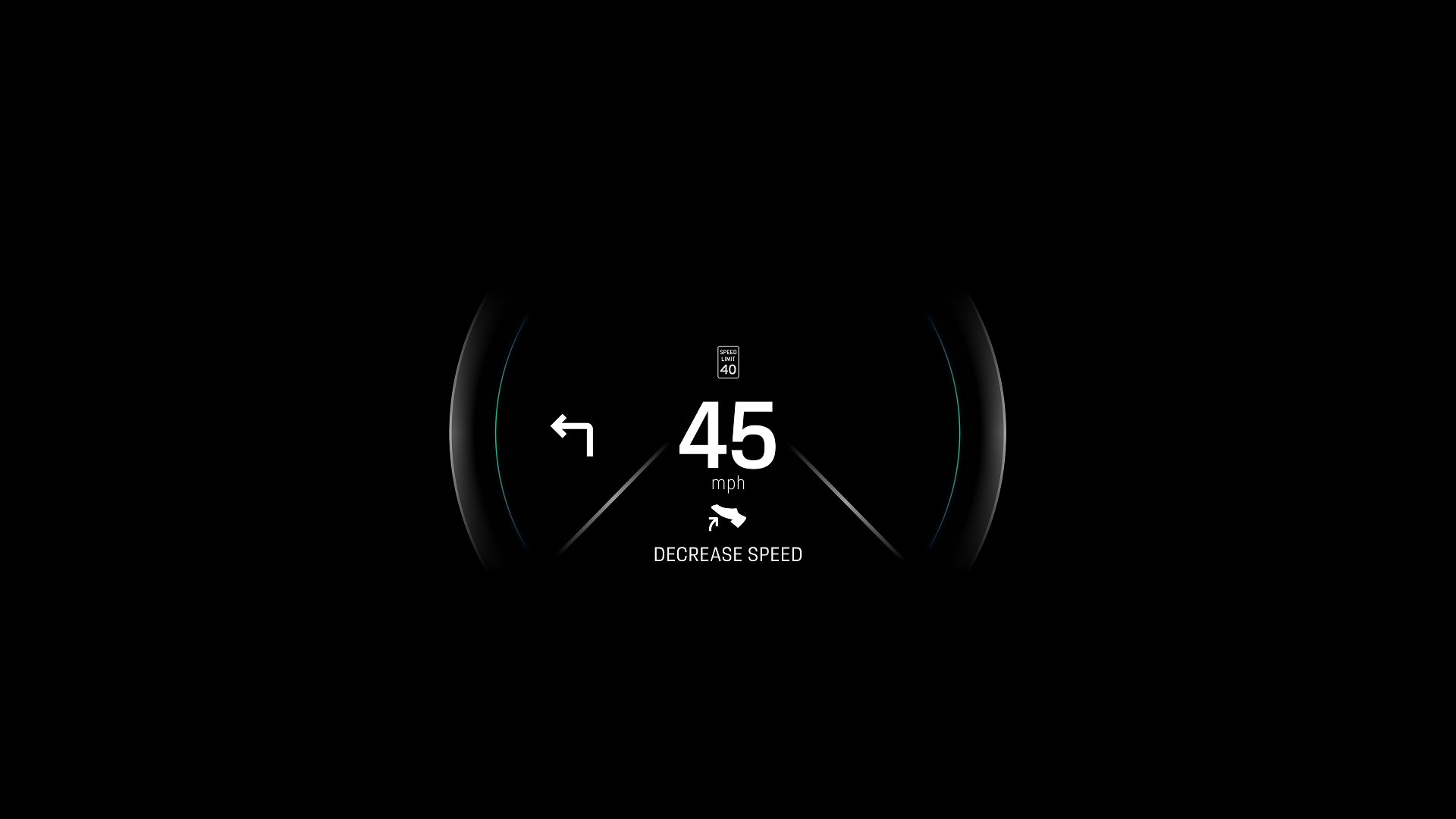
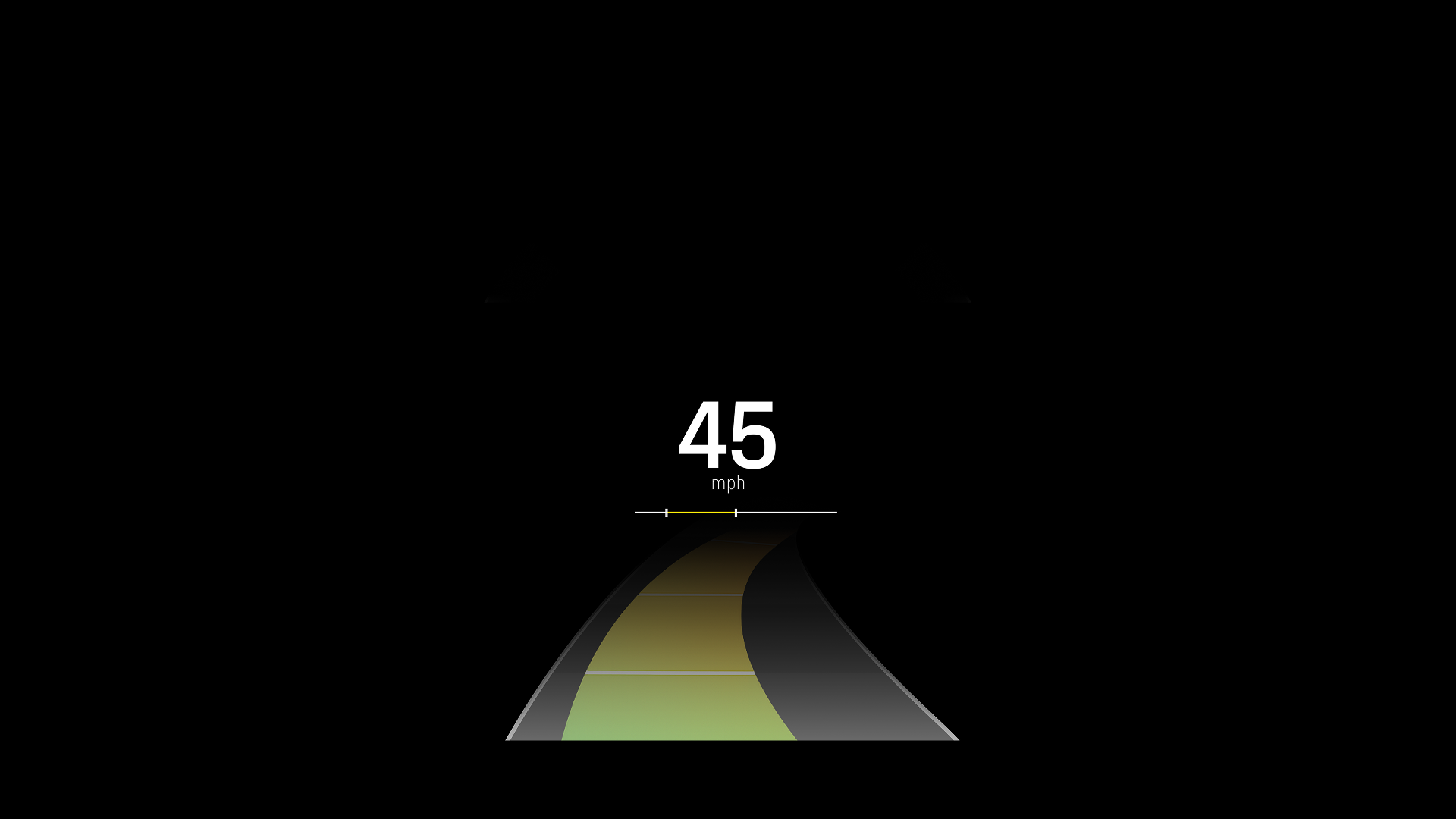
Born in testing. The head-up display was shaped through repeated user sessions until only the right details remained. The hierarchy follows the eye: speed, limits, and the next turn meet your gaze, then step aside. Bright by day. Gentle at night.

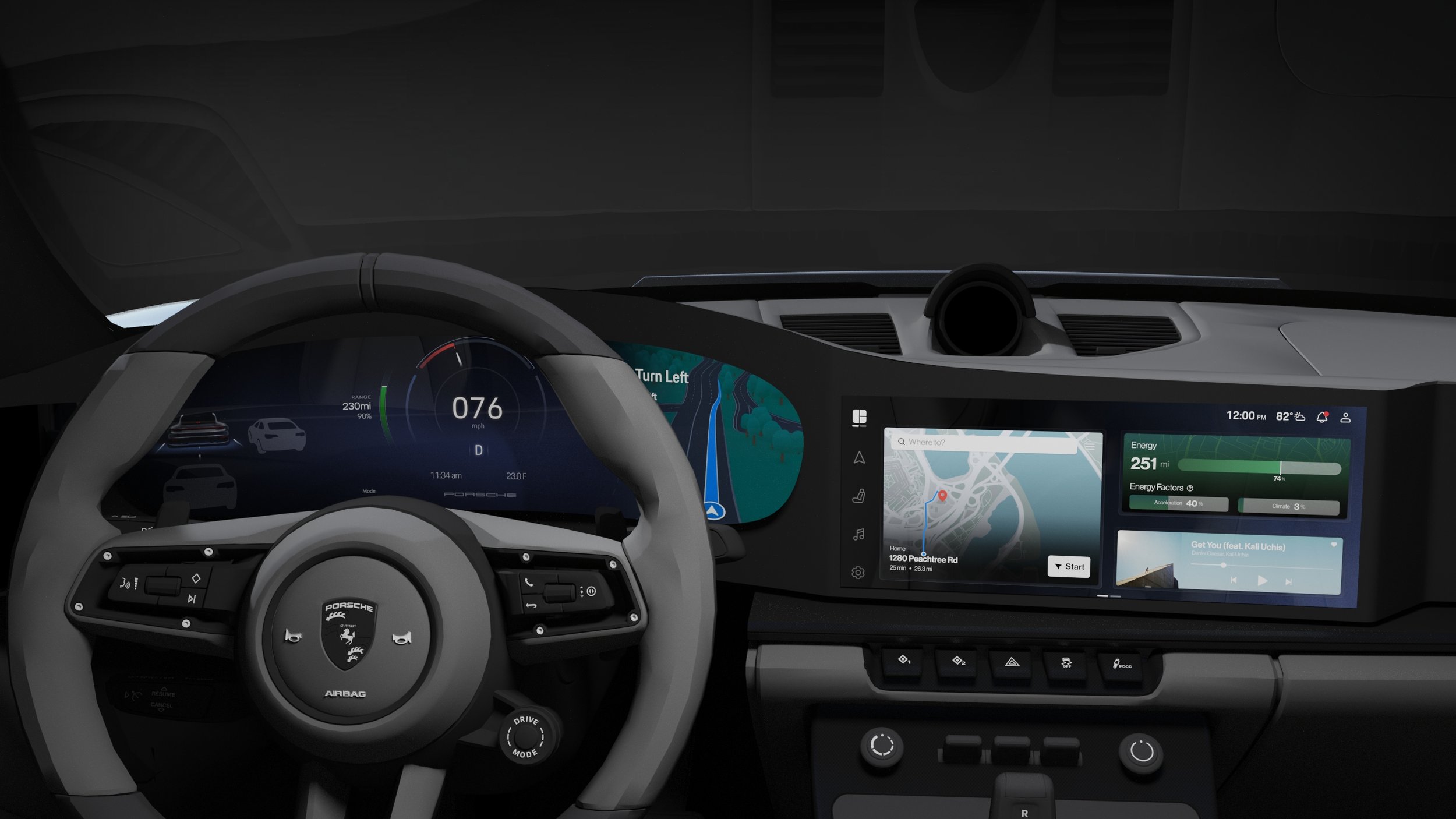
Comfort Mode
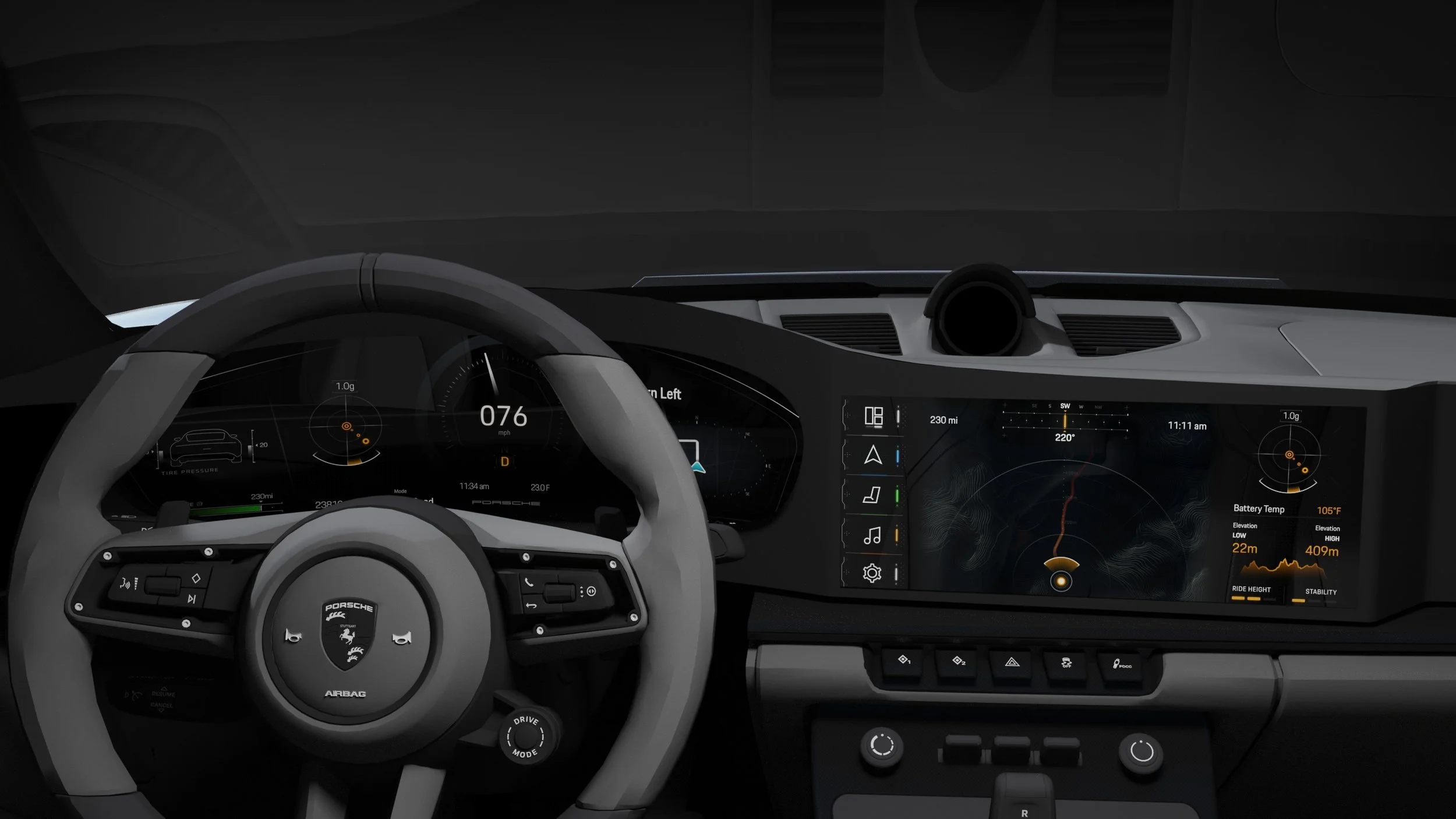
Off Road Mode
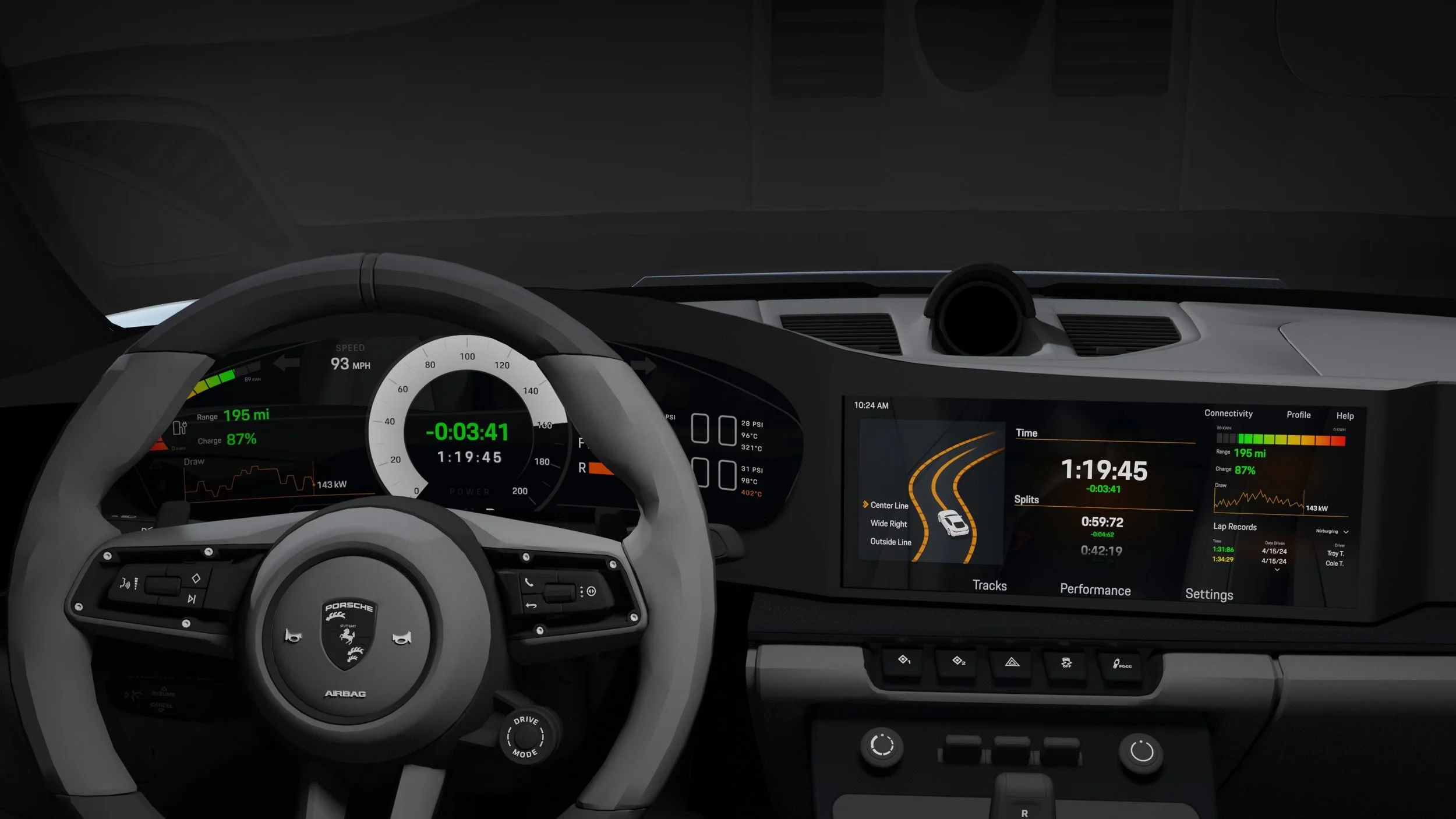
Track Mode
Improvements from
the original interface
Task time
Mispresses
↓ 33.1%.
Success rate
96%
↑
79%
SUS score
74%
↑
61%
Confidence in use
24.2%
↑
↓ 55.4%
Industrial Design
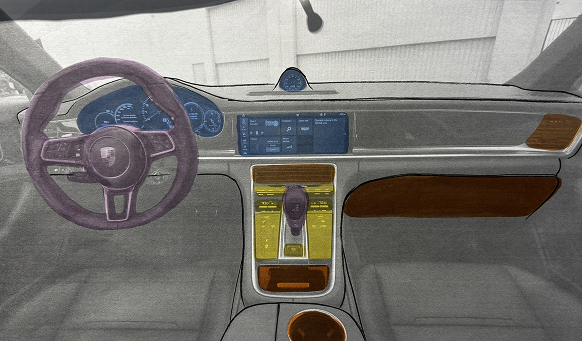
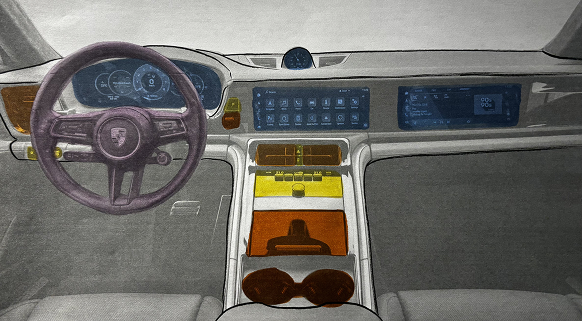
Research Brand DNA
Tracing the core elements that define Porsche’s identity across time
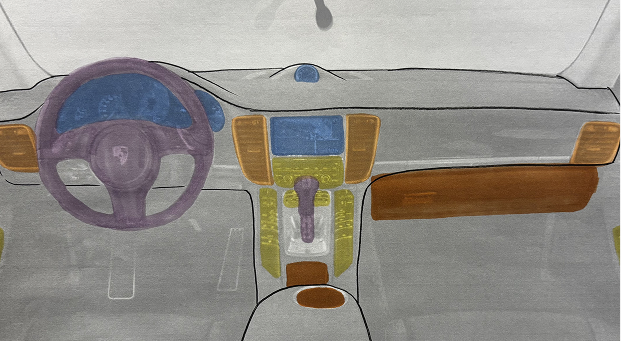
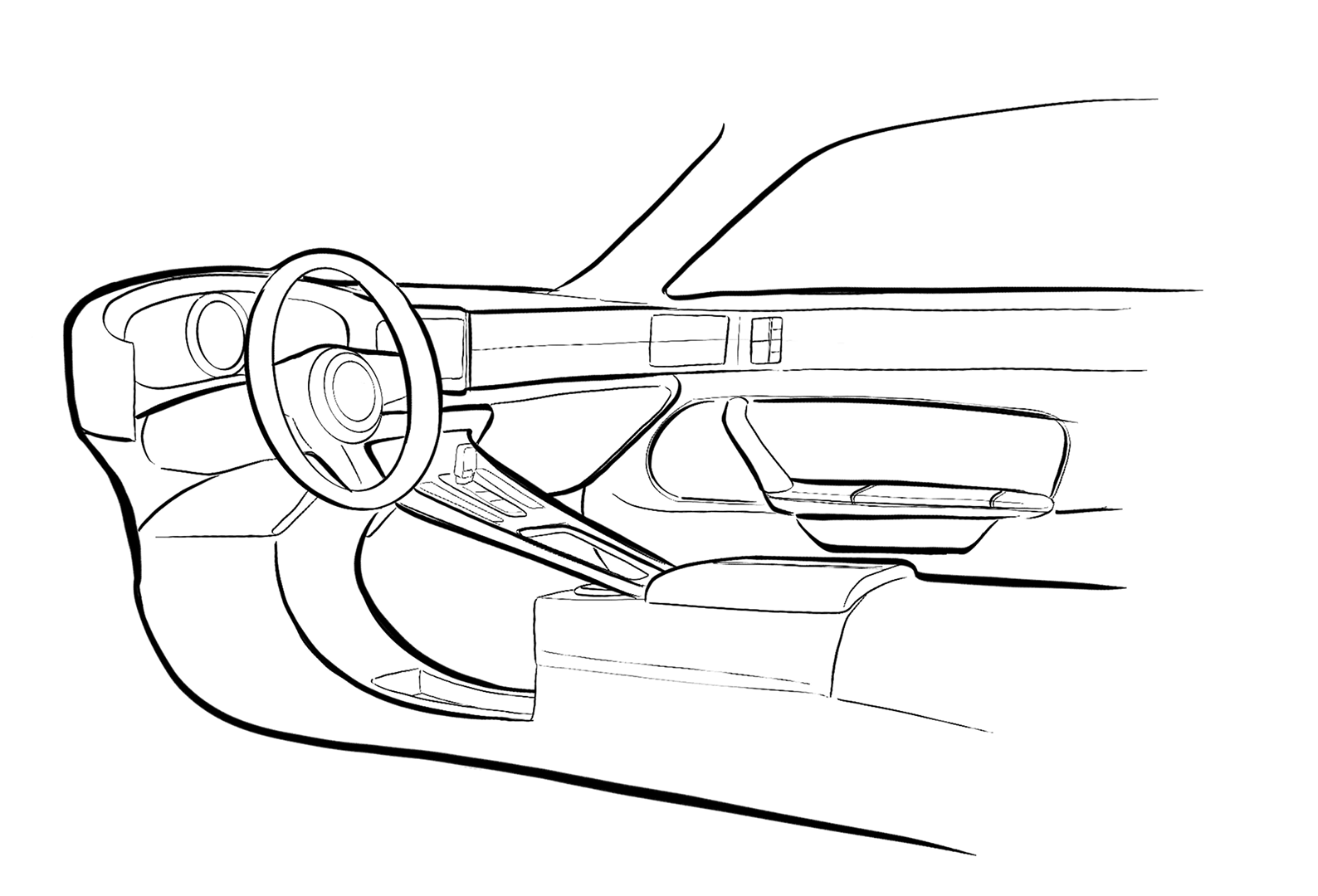
Ideation & Layout
Rapid, divergent sketches map possibilities. Thumbnails, overlays, and scenario sketches explore posture, affordance, and flow.
Sketches act as test artifacts in quick critique sessions. Feedback narrows concepts and informs the next steps
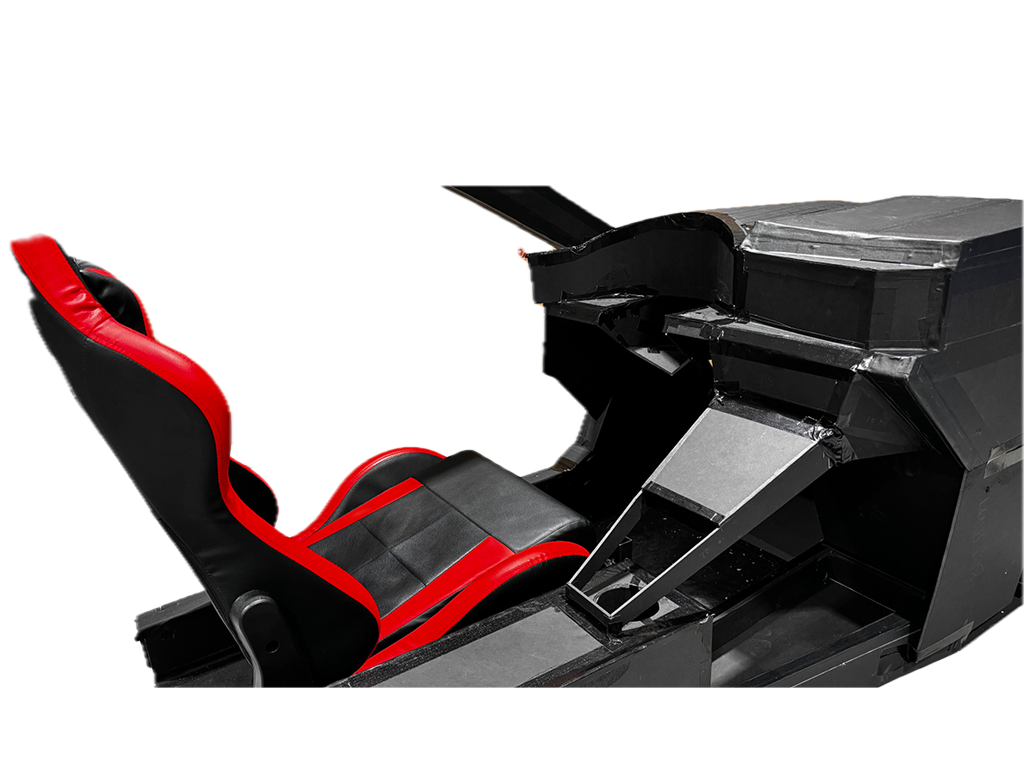
1:1 Low Fidelity Model
A 1:1 model shows what drawings hide: how hands move, how eyes land, how bodies settle. It reveals real constraints.
Posture, reach arcs, and movement sequences were recorded. Those measurements tightened dimensions and grounded the layout in human behavior.
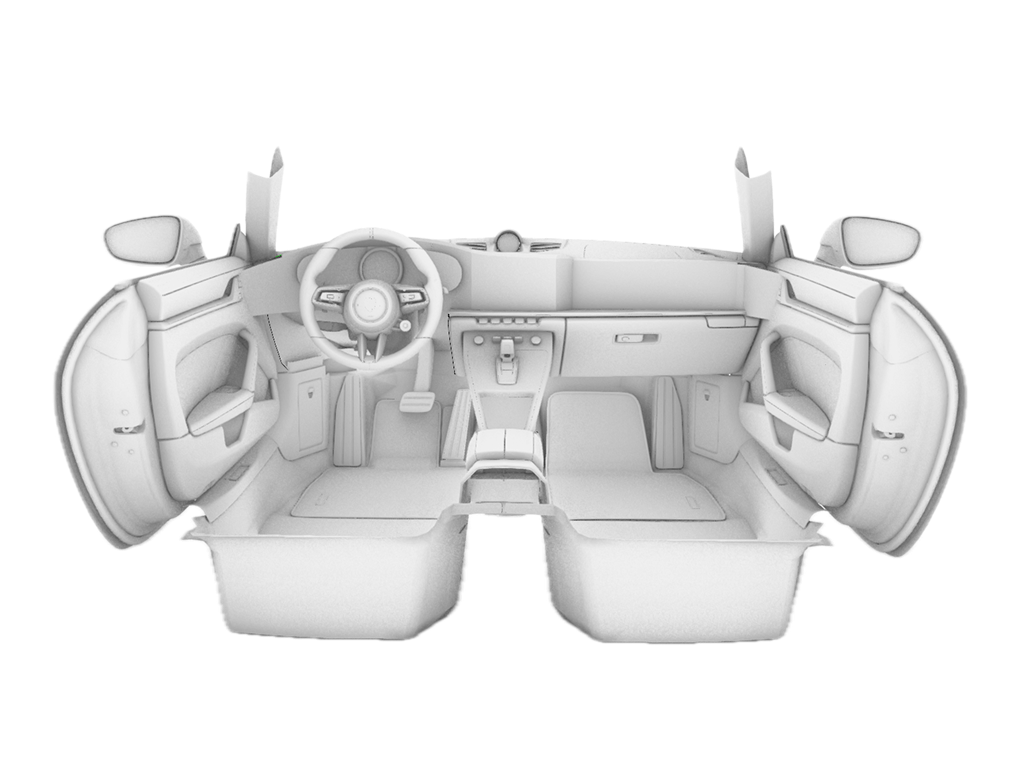
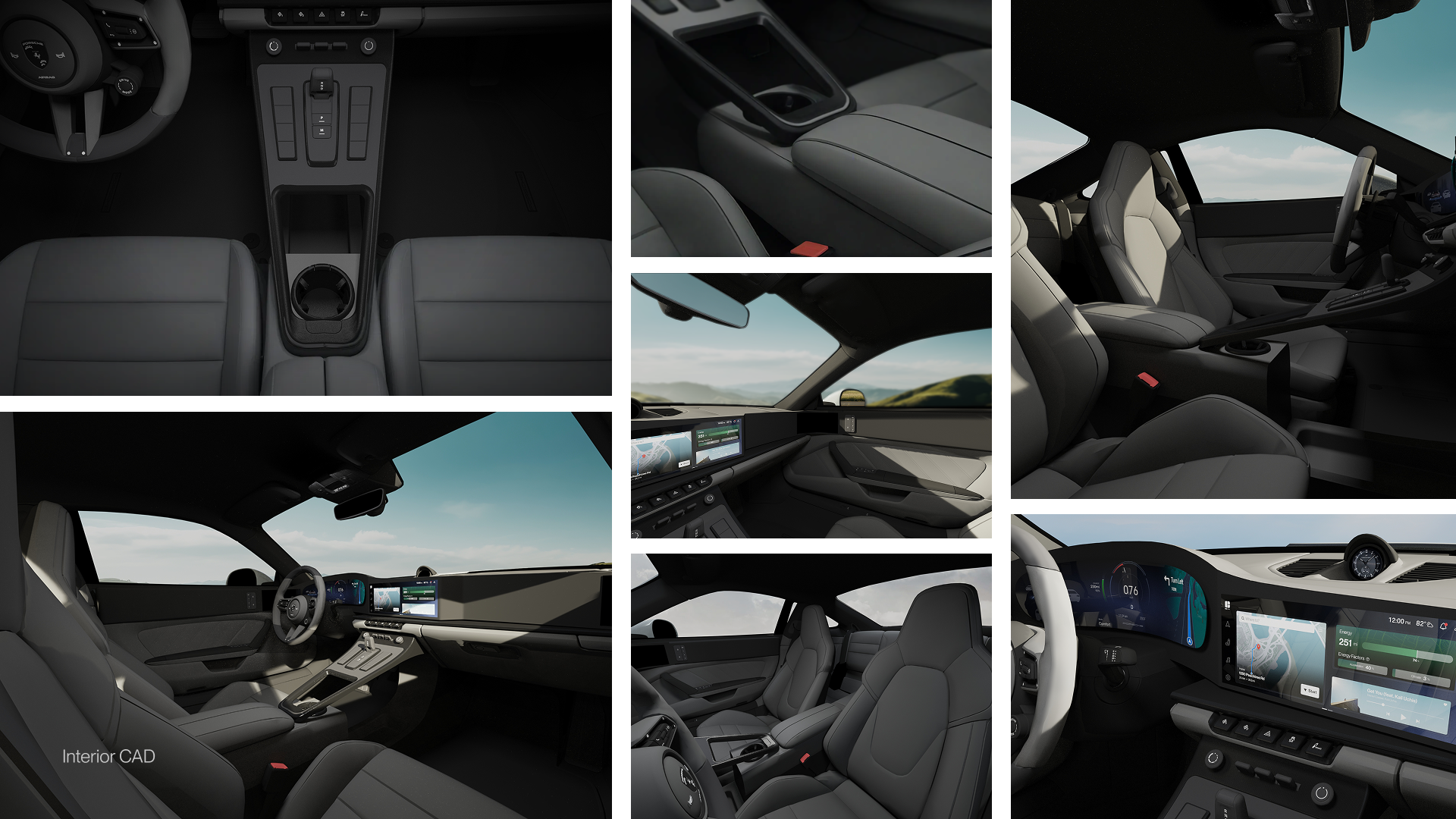
CAD File
Geometry defined for renders and rapid prototyping. Clean surfaces, correct scale, and simplified topology enable fast iterations and accurate visualizations.
Export-ready files support light studies, material passes, and prototype prints while preserving change history for design decisions.
UI, UX, ID, UT, Research and so much more
You might also like…
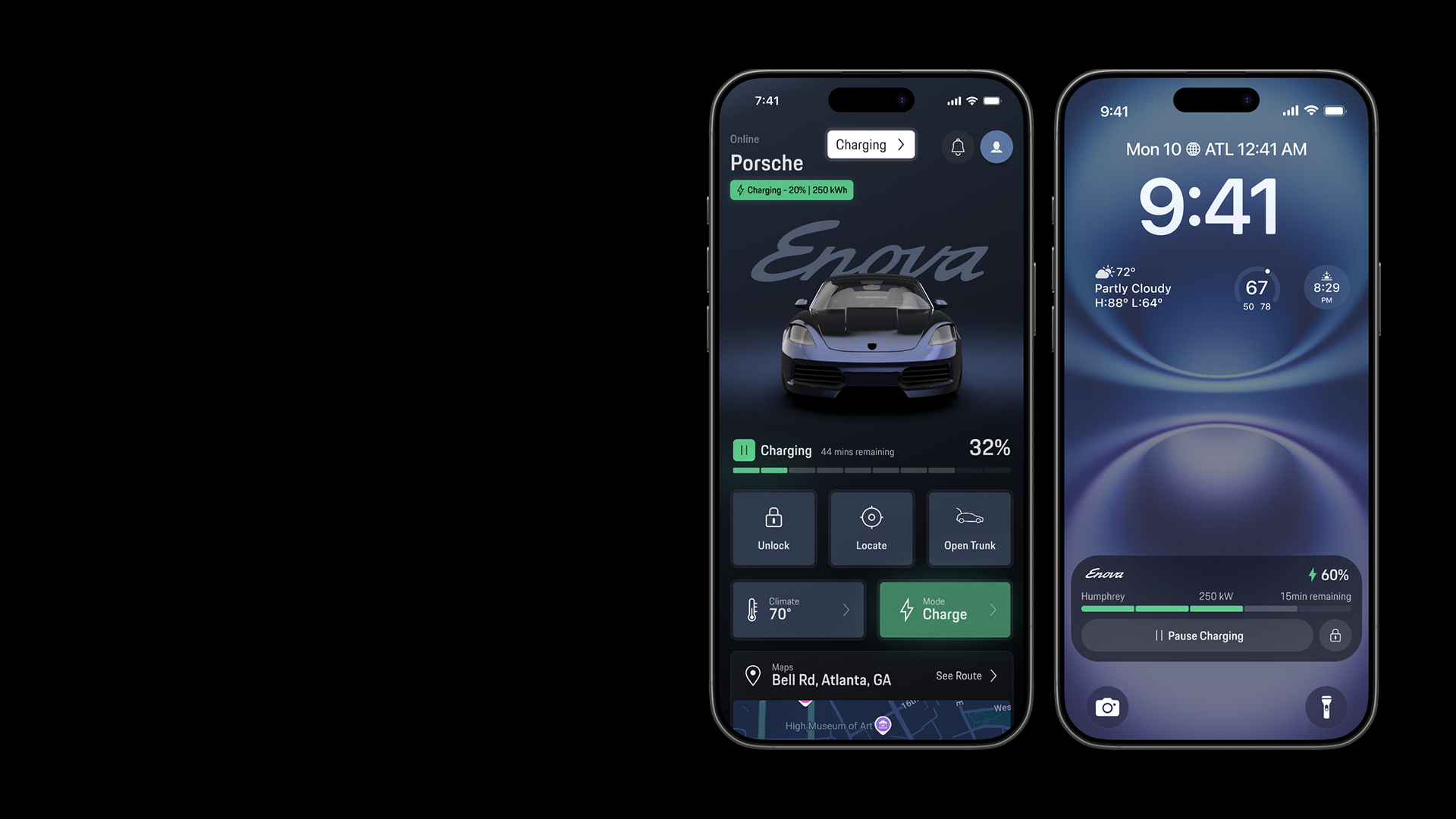
Porsche Digital Experience
An app that feels like a Porsche. As it should have long time ago.